What should you do the first day you notice cicada killer wasps?
Step back and watch before you react. A large wasp flying low over your lawn looks alarming, but males patrol territory without a working stinger, and females use their sting on cicadas, not on people who leave them alone.
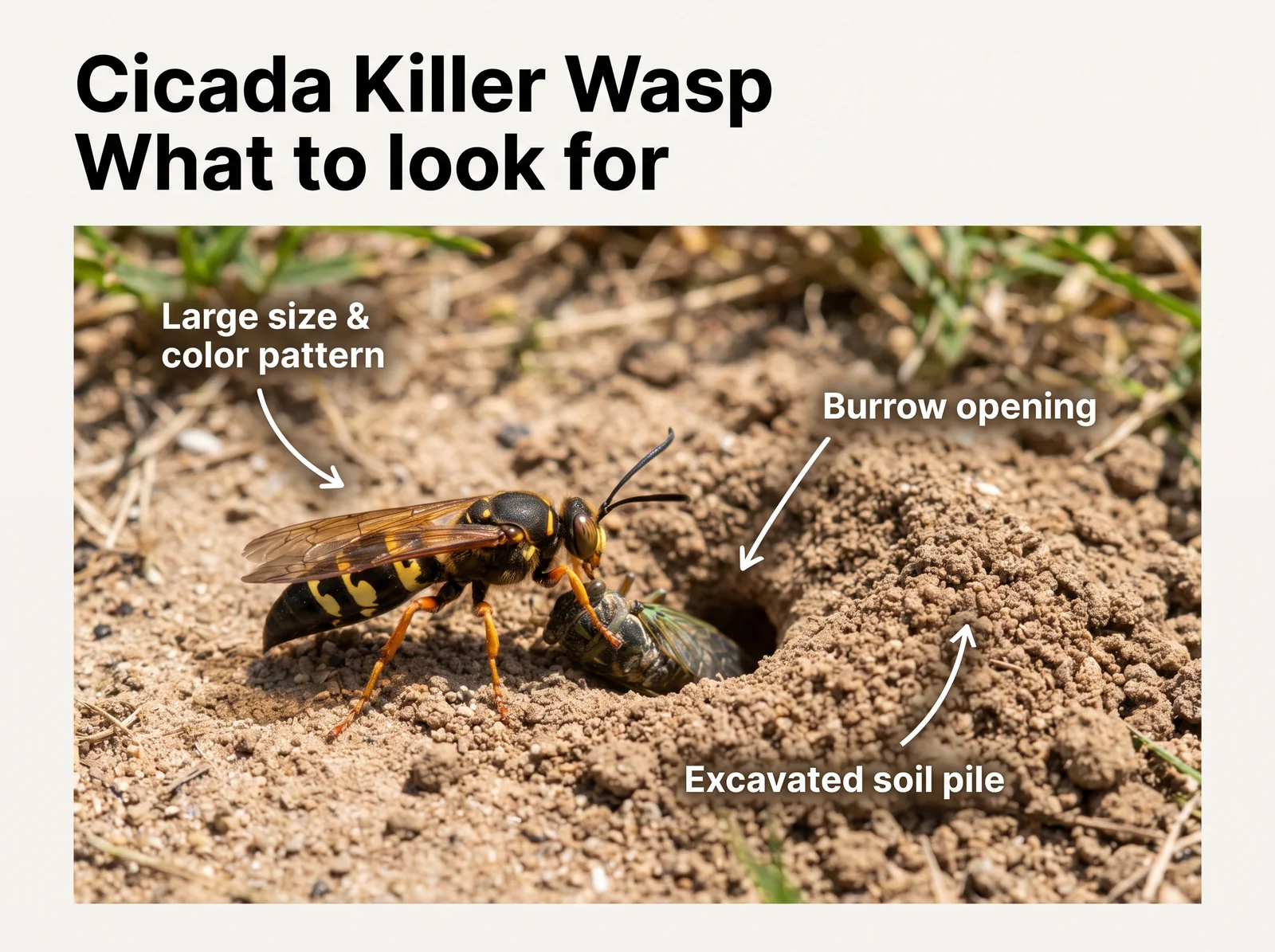
Walk your yard at midday, when activity peaks, and look for small mounds of loose soil with a U-shaped or horseshoe-shaped entrance. These usually show up in thin turf, sandy garden beds, along sidewalk edges, or in play sand.
Mark each burrow entrance you find with a stick, flag, or chalk mark so you can track it later. Count how many separate holes you see, since cicada killers often nest in loose groups even though each female digs her own tunnel.
If burrows are near a doorway, sandbox, or play area, keep kids and pets off that patch for now while you plan next steps. There's no need to spray anything yet.
How do you confirm it's actually a cicada killer wasp?
Cicada killer wasps are big, black and yellow striped, with rust-colored wings and a heavy body. People often confuse them with European hornets or yellowjackets, which are smaller and much more likely to defend a nest.
Behavior tells you more than color alone. Cicada killers dig individual burrows in open dirt or sand and fly low over bare ground; they generally ignore people walking nearby. Yellowjackets and hornets nest in wall voids, eaves, or dense shrubs and react fast to disturbance.
Getting the ID right matters because the right way to get rid of cicada killer wasp activity is not the same approach used for a yellowjacket colony in a wall. Treating the wrong pest wastes time and can increase sting risk.
If you're still unsure, comparing your wasp against clear photos before you act saves you from either overreacting to a harmless solitary wasp or underreacting to something more aggressive.
Where do cicada killer wasps nest, and how do you find the source?
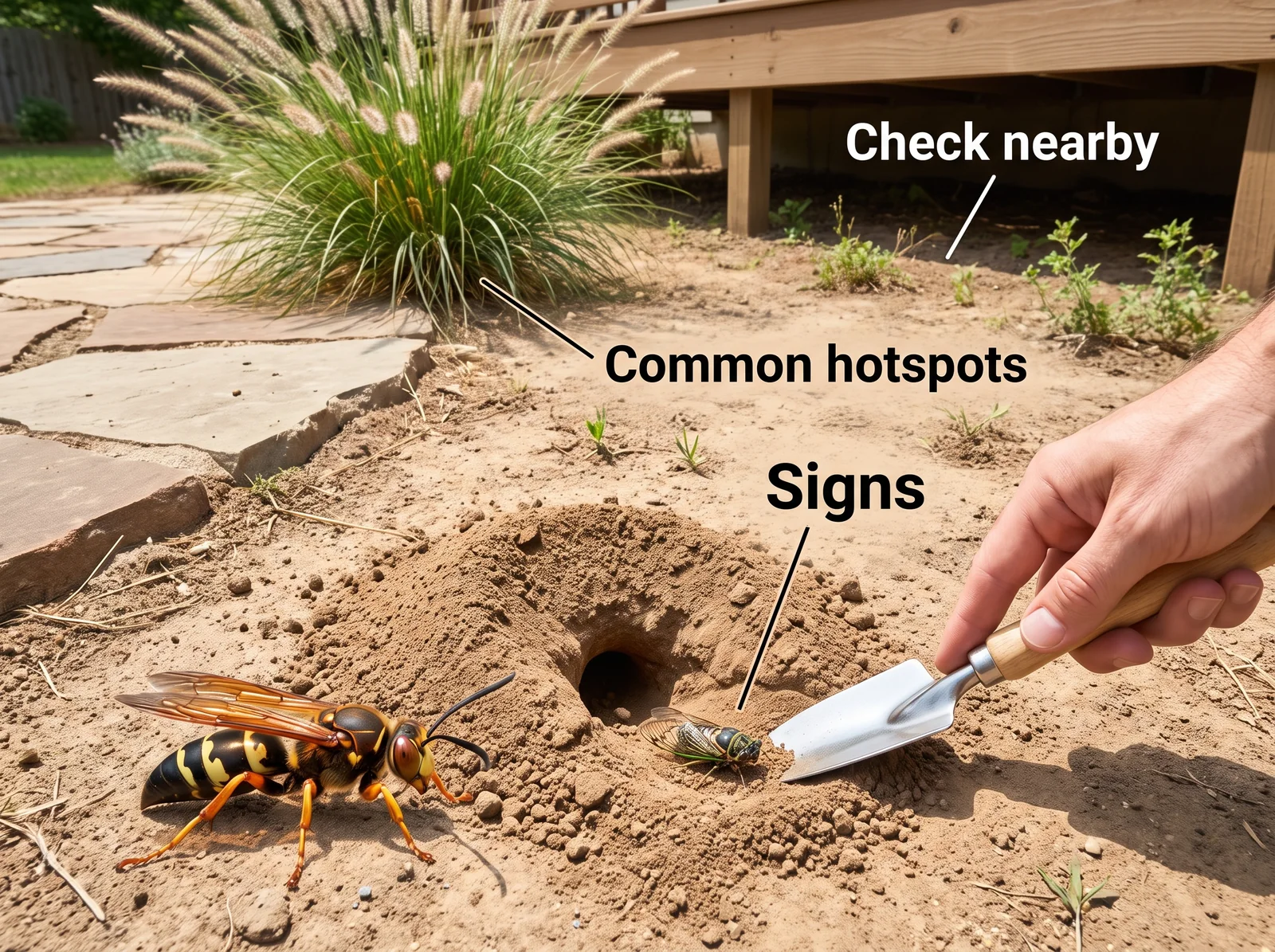
Female cicada killers dig burrows in well-drained, sparsely vegetated soil: sandy garden beds, sloped lawns, along sidewalk cracks, under decks, or in sand traps and playground sand.
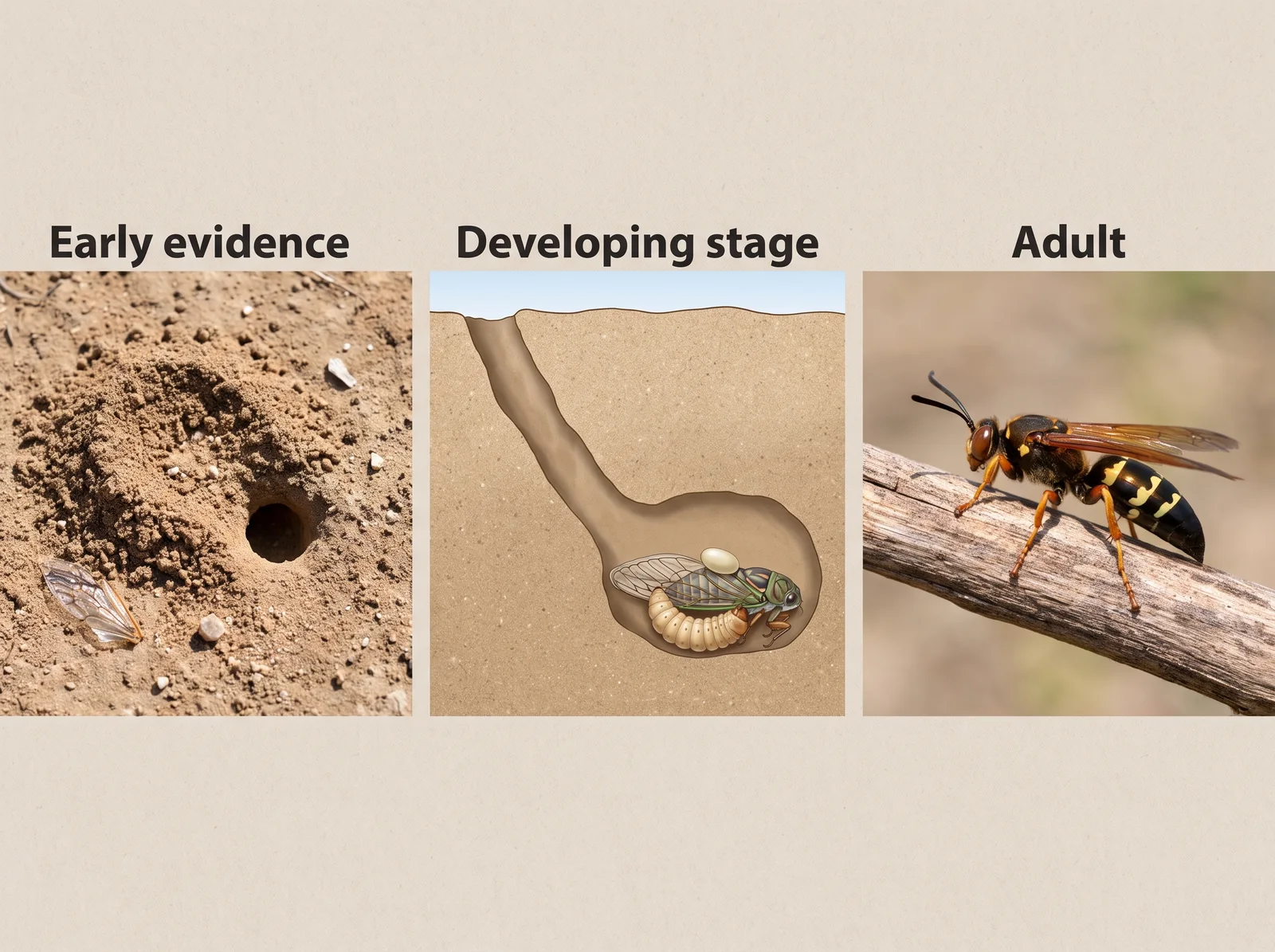
Each entrance is roughly half an inch wide with excavated soil pushed to one side in a small fan-shaped mound. That mound is the clearest sign you're looking at a cicada killer burrow rather than an ant hill or another ground insect.
Walk the entire yard, not just the spot where you first spotted a wasp. Because cicada killers often nest in loose aggregations, one burrow usually means several more are nearby, especially in bare, sunny patches with thin grass.
Note what's making the site attractive: exposed dirt, sandy or loose fill soil, poor drainage, or turf thinned by foot traffic or shade loss. Those details point to long-term fixes, not just a one-time treatment.
What are your options to get rid of cicada killer wasp burrows?
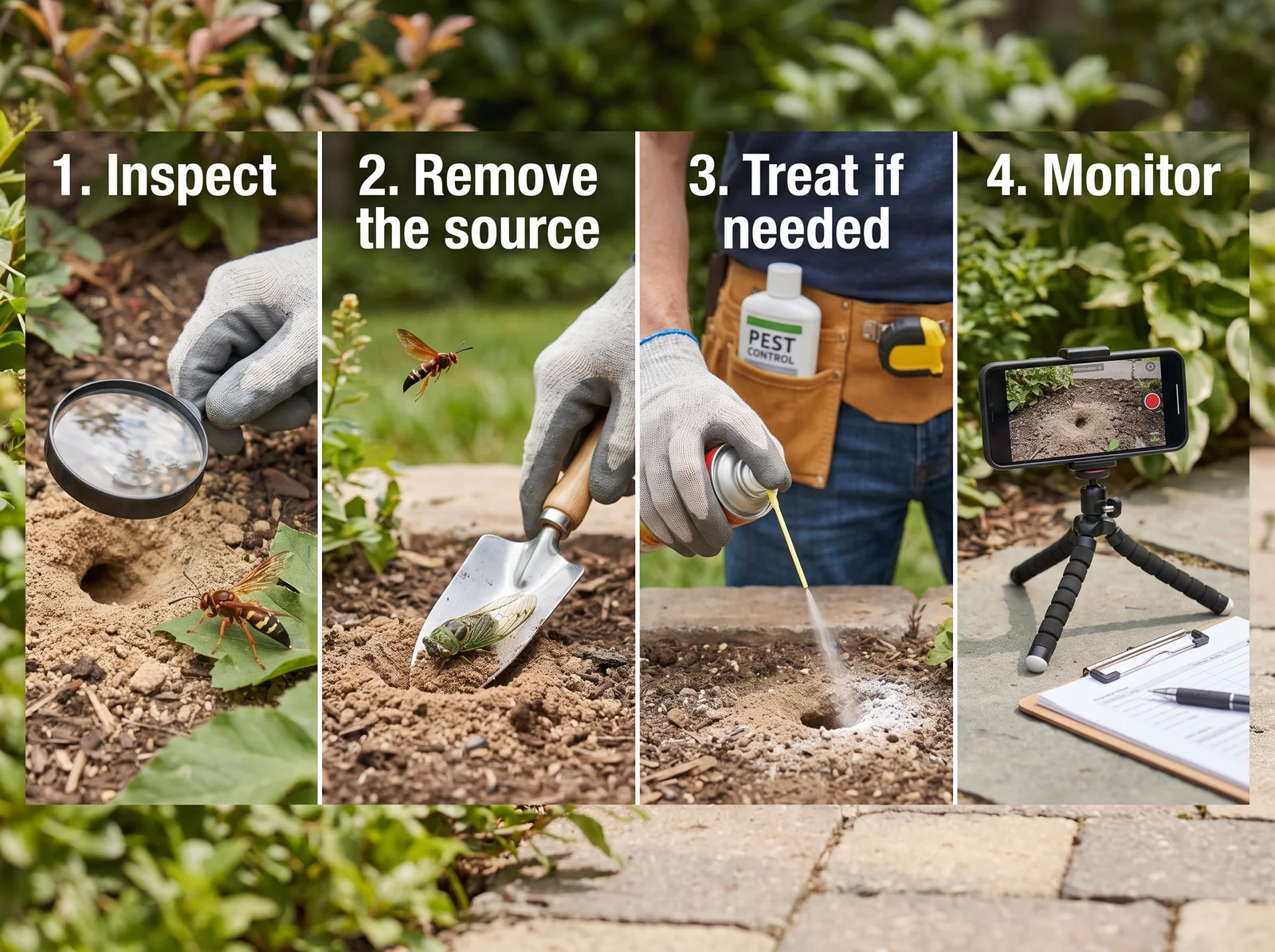
Start with non-chemical steps. Because these wasps are solitary and rarely aggressive, many yards never need a pesticide at all. Keeping the burrow area consistently damp with regular watering can discourage females, since they prefer dry, loose soil for digging.
Improve the turf. Overseeding, aerating, and fertilizing bare or thin patches removes the open, sandy soil cicada killers need. A thick, healthy lawn is one of the most reliable ways to get rid of cicada killer wasp nesting sites without spraying anything.
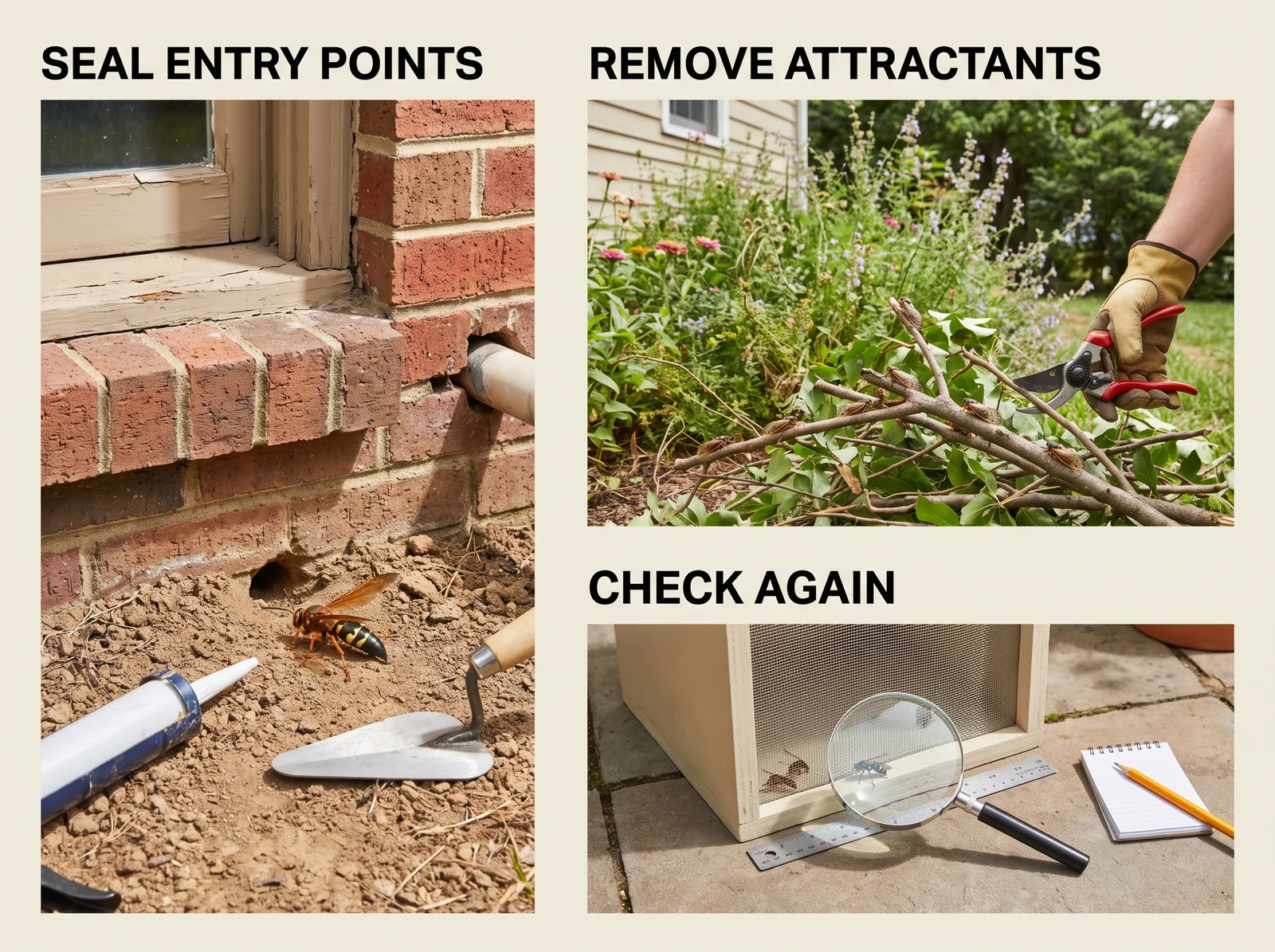
Handle small numbers of burrows by hand. Once you've confirmed no wasp is at the entrance, fill the hole with soil and tamp it down. Repeat if it reopens, since persistence usually outlasts the short summer window when females are active.
If burrows are widespread or sit right next to a doorway, patio, or play area you can't avoid for weeks, an EPA-registered pesticide labeled for ground-nesting wasps and for outdoor turf is an option. Choose a product labeled for that pest and site, and follow the entire label for timing, application, and reentry.
How do you monitor your yard after treatment?
Check the burrow entrances you marked every few days for one to two weeks. A fresh soil mound or a reopened hole means a female is still using that tunnel.
Cicada killer wasps are typically active for a few weeks each summer, tied to when annual cicadas emerge. Two quiet weeks with no new mounds is a good sign activity has wound down for the season, though it doesn't guarantee every burrow is permanently abandoned.
Watch the same bare or sandy spots again next year. Since these wasps favor disturbed, open soil, unchanged conditions tend to attract new females even after old burrows are gone.
A simple log with a photo and date each time you check helps you see whether the number of active burrows is dropping or whether you're dealing with a larger group than you first thought.
How do you keep cicada killer wasps from coming back?
Fix the soil conditions first. Dense, well-watered turf with no bare patches removes the loose, dry ground cicada killers need to dig, and it's the single biggest long-term prevention step you can take.
Cover or convert problem spots. Bare areas along sidewalks, sandboxes, and sloped beds can be covered with mulch, groundcover plants, or landscape fabric under gravel, which makes the ground much harder to burrow into.
Address drainage in low or compacted spots. Loose, dry, sunny soil is far more attractive to cicada killers than consistently damp or shaded ground, so fixing drainage limits new nesting sites over time.
Keep watering consistent through the digging season rather than doing a single heavy soak. A patch that dries back out and turns to bare dirt again is likely to draw wasps right back.
Are cicada killer wasps a real risk to children and pets?
Male cicada killers can't sting at all since they lack a functional stinger. Females can sting but rarely do unless they're picked up, stepped on barefoot, or squeezed; their sting is meant for cicadas, not people.
The bigger everyday risk is curiosity. A large, loud wasp flying low over the lawn is unsettling, and kids or dogs may try to catch one or dig near a burrow, which is usually when stings actually happen.
Keep bare feet, digging pets, and curious hands away from marked burrow areas until you've dealt with them, especially in sandboxes or garden beds where wasps are actively nesting.
If someone is stung and has a known insect sting allergy, or develops swelling beyond the sting site, hives, or breathing trouble, treat it as a medical situation and get care right away. That's beyond general pest advice.
When does cicada killer wasp removal need a professional?
Most cicada killer situations are manageable with lawn changes, watering, and a little patience, since these wasps are solitary and active for only a few weeks each year. Some situations, though, are better handled by a licensed pest professional.
Call one if you're dealing with a large aggregation of burrows, a dozen or more, especially near a doorway, patio, or play area that people can't easily avoid for several weeks.
Get help if you're not confident in the ID and there's a chance you're actually dealing with yellowjackets, hornets, or another stinging insect that nests in walls or eaves, since those need different treatment and carry more sting risk.
A professional is also worth calling if someone in the household has a known sting allergy, if burrows sit under a structure or near a foundation, or if the same spot keeps reopening after a full season of DIY effort.
Questions you may still have
Will cicada killer wasps attack me if I walk near their burrow?
Almost never. Cicada killer wasps aren't territorial the way yellowjackets or hornets are. Males patrol and may fly close to check you out, but they have no functional stinger. Females are focused on digging and hunting cicadas, and they generally ignore people walking or mowing nearby. Stings happen mainly when someone picks one up, steps on it barefoot, or grabs it, so normal yard activity around a burrow is low risk.
Do I need to spray my whole yard to get rid of cicada killer wasp burrows?
No. Because these wasps target specific bare, sandy, sun-exposed spots, whole-yard spraying isn't necessary or recommended. Focus on the actual burrow entrances and the conditions that created them, like thin turf or poor drainage. Improving the lawn in those exact spots usually solves the problem without any pesticide, and if you do use a product, it should be labeled for that pest and applied only to the affected areas per the label.
How long does cicada killer wasp season last?
Adult cicada killer wasps are typically active for a few weeks during mid to late summer, matching when annual cicadas emerge in your area. Outside that window, you won't see new burrows opening. This is why watching activity over a couple of weeks, rather than reacting to a single sighting, gives you a clearer picture of whether you have a real ongoing issue or just a few passing wasps.
Can I just fill in the burrow holes?
Yes, for a small number of burrows this works well. Confirm no wasp is at the entrance, then fill the hole with soil and tamp it down firmly. A determined female may reopen it, so check back every few days and refill as needed. This approach is most practical when you're dealing with a handful of burrows rather than a large aggregation spread across your yard.
Are cicada killer wasps good for anything?
They help control cicada populations, since females hunt cicadas to feed their larvae underground. They're also not aggressive toward people in the way social wasps are, which is part of why many pest professionals suggest tolerance and habitat changes over pesticide use when burrow numbers are low and nests aren't near high-traffic areas.